Let's talk about antidepressants and RFK's plan to change how they're prescribed
How our mental health has been overmedicalized

This is not going to be a comfortable blog post to read. However, if you clicked on it, there’s a chance you may be ready to have the conversation I’m proposing here.
“He who has ears to hear, let him hear.”
Jesus repeatedly used this phrase before he was about to dish out some capital-T truth. He used this phrase after parables including the Parable of the Sower (Matthew 13, Mark 4, Luke 8) and the Parable of the Tares (Matthew 13). He also used it when he claimed he was the Messiah prophets told of (Matthew 11) and in his teachings about the importance of salt (Luke 14).
I am not the Messiah, but I am going to tell you some stories that demonstrate uncomfortable truth.
Why do I care about RFK’s plan?
Before I get into details, know that Health Secretary Robert F. Kennedy Jr. is not banning antidepressants or trying to make it harder for you to get on one if you need one. He himself is also not a mental health professional, but he does have a very powerful role in our government. Don’t get it twisted, and don’t let online fearmongerers get you whipped up into such a frenzy that you need more medication.
SSRIs are not going away, but there is work being done to ensure you have the support you need if you want to stop taking them.
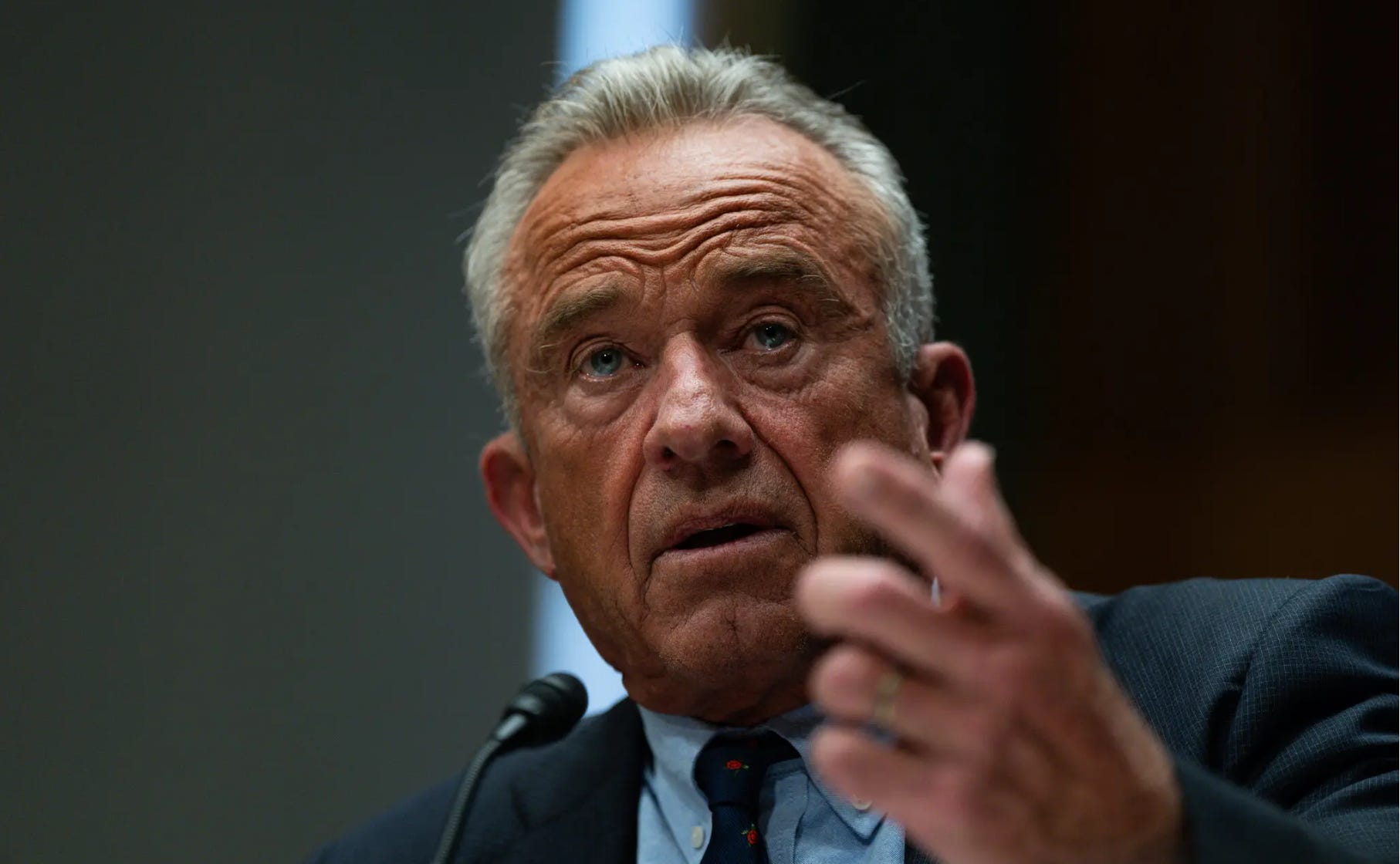
On Monday, Kennedy announced a plan to create new guidelines about how SRRI (Selective Serotonin Reuptake Inhibitors) are prescribed. SSRIs are drugs like Zoloft, Prozac and Lexapro. His plan includes more training and education for the healthcare professionals who prescribe them and more resources to give physicians the information they need to help patients get off these medications.
As part of the plan, Kennedy said the Centers for Medicare and Medicaid Services is introducing a program that will allow clinicians to be paid for time spent helping a patient get off medications.
The plan also includes the Department of Health and Human Services creating clinical guidelines for deprescribing SSRIs. The New York Times also reported that this summer, the Substance Abuse and Mental Health Services Administration, or SAMHSA, will release training modules focusing on the risks of psychiatric medications and on tapering and deprescribing.
“Psychiatric medications have a role in care, but we will no longer treat them as the default, we will treat them as one option, to be used when appropriate, with full transparency and with a clear path off when they are no longer needed,” Mr. Kennedy said at a Mental Health and Overmedicalization Summit organized by the MAHA Institute.
He added: “Let me be clear: If you are taking psychiatric medication, we are not telling you to stop. We are making sure you — and your clinician — have the information and support to make the right decision for you.”
I have been away from journalism for two years now. I do not regret choosing to leave journalism after I was laid off from Reckon.news (RIP), but I do feel like this is a good opportunity to share a little more about my personal experience with antidepressants. I made my mark in journalism by telling my uncomfortable stories on the internet, and I’m going to do that again now.
My story
I started taking Prozac in September 2021 after deciding I was sick and tired of trying to manage my OCD and intrusive thoughts. I do have two mental health diagnoses: OCD (Obsessive-Compulsive Disorder) and PMDD (Premenstrual Dysphoric Disorder). OCD is an anxiety disorder and PMDD is a mood disorder. I manage my symptoms now with hormonal birth control and meditation.
While taking Prozac I experienced I curious loss of apatite. I no longer got hungry. I also experienced worsened IBS symptoms and nausea that never went away for the entire 3 years I was on Prozac. However, despite all these symptoms, I kept taking it. I didn’t feel anxiety, and my OCD was under control. The problem was, not only did Prozac take away my anxiety, it took away all of my feelings. I was apathetic. I didn’t care that my marriage was falling apart. I didn’t care that I no longer felt joy in things I used to like. I just… didn’t care. About anything. Red flag.
Again, the anxiety relief was all my doctor was concerned about. And frankly, it was all I was concerned about too. I had spent so many years in so much torment from my anxiety that I didn’t care about anything but feeling better. Also, red flag.
I quit taking Prozac cold-turkey in June 2024. At the time I was prescribed 60mg daily (a heavy dose). My entire life was in turmoil. And I, in my recklessness, decided that if everything was going to suck for a while, I should just go ahead and add quitting SSRIs to the list.
Dear reader: do not do this.
Choosing to flush my entire prescription down the toilet and quit cold turkey is one of the most reckless things I have ever done. I have a 6-month memory gap from the day I quit until around the 2024 holiday season. This is a side effect of quitting SSRIs cold turkey. I did experience what many describe as “brain zaps” and a few other weird symptoms, but alas, I don’t remember exactly what they were. I simply don’t have memory of them all. All I know is there was a 6-month period of weirdness.
During that time I made a lot of big changes. I went back to school and earned my CER certificate and started a new career as a court reporter. Somehow, I still remember all my training, but I think that’s an issue a neuroscientist should address. I am not a mental health professional or a neuroscientist, so I will leave those issues for them.
All I know is that my choice to quit cold turkey was extremely reckless and could have seriously harmed my neurological health long-term. Heck, it could have. I don’t know. All I know is that now I am ok and managing my mental health decently well. I have some bad days still, but that’s also part of being alive.
Managing my mental health has been an exercise in learning how to accept reality. Once I got over the fear of looking at what’s really going on, I felt a lot of relief. Reality is the antidote to my obsessions and compulsions. Once I step away from the onslaught of unreasonable bullshit in my head, I am much more capable of telling my intrusive thoughts to fuck off. In turn, I’m able to control the compulsive behaviors I engage in to try to manage my obsessions.
This is not an easy task. Normal therapy often makes OCD worse. That was my experience with therapy. It’s also a big reason why I quit going to therapy. All they wanted to do is make me talk through everything, and I could not make a single therapist understand that I had already done this exercise over and over. Doing it again and paying someone to listen to me do it just didn’t make sense to me.
Kennedy has also talked about the overmedicalization of our mental health. I also experienced this in therapy. All a therapist ever wanted to do was give me more diagnoses and medicine to deal with it. I hope to never fill out another PTSD screening form. (As a side note, I do probably have some form of PTSD, but that is a topic for another day.)
Putting more letters by my name made me feel worse. It did not empower me or give me any additional tools to address my problems. Addressing my problems required me to address reality. A new diagnosis will not change reality.
Part of learning how to manage my symptoms has been accepting the fact that happiness is not a life requirement. Happiness, in some form, is a part of life, but it is not the entire purpose or goal in life.
“All I want is to be happy.”
“All I want is for you to be happy.”
“Your life should feel good, and you should be happy with who you are and what you are doing.”
These last three statements are largely lies. Let me explain.
The whole purpose of life is not to be happy. The purpose of life is to contribute in a meaningful way to something, and to be able to offer something of value that also brings you satisfaction.
You have to find whatever that is. Many find it in religion, their job or their family. I find it in my garden. (Silly, but important. Also, a blog for another day.)
Purpose, fulfillment, and worth are not synonyms for “happy.” However, I would argue that happiness is often a side effect of these three things. If you are contributing to something in a meaningful way, that makes you feel good.
We put so much time and energy into “feeling good.” This is one of the slippery slopes into addiction. If you can’t manage your stressful day at work without drinking yourself to sleep or smoking so much weed that you struggle to pay your bills, you may be an addict.
Our modern life also doesn’t help us with this task of not becoming an addict. It’s so easy to buy alcohol or gummies or video games or porn or whatever else you use to feel better. But if you’re so unhappy that you can’t sit with a little bit of discomfort without a mental anesthetic, maybe it’s time to evaluate what’s really going on.
Do you hate your job?
Is your diet comprised of processed junk food and drugs?
Is your boss abusive?
Is your partner a piece of shit?
Are there other controllable external pressures making you miserable?
Are you bad at setting boundaries?
This is just a short list of things worth evaluating that may be making you miserable.
I was in a not-so-great marriage. I don’t want to air that dirty laundry here, but getting divorced did wonders to address a lot of my anxiety. I was with the wrong person, and I knew it. It was making it much harder to manage my existing mental health issues. Enter: Prozac.
I don’t regret taking Prozac. I am comfortable saying I have no regrets in my life. All the bad decisions I’ve made have made me who I am, for better or for worse. I cannot change those choices, but I can learn from them. I’ve been able to improve other areas of my life because of the lessons I’ve learned through my own bad choices.
You don’t have to be a sad sack of regret if you don’t want to be. You can make the choice to learn and be grateful for your own stupidity. It’s better to accept reality and say “I did it and it was dumb, but now I am a more well-rounded person because of it” instead of carrying around a big bag of shame. Trust me.
While I dodged a major bullet when quitting Prozac, the long-term use of mental health medications can cause real, irreversible problems with your mental health.
Let’s talk about Jordan Peterson
Jordan Peterson is a well-known author, professor and lecturer best known for his book “12 Rules for Life.” (It’s a very good book and I recommend you read it.)
He is currently experiencing major health complications of taking anxiety medications. His daughter, Mikhaila Peterson, posted an update on his health last week on YouTube.
JP is experiencing what his daughter described as akathisia, a condition where you cannot sit still. She claims he was injured by his long-term use of anxiety medications.
Mikhaila claims no one, not even JP, knew about these side effects. No one told him this could be a result of these meds. Doctors seem all too eager to hand out anti-anxiety medications like Xanax too.
When I went to my well-woman visit in 2020, the doctor asked me if I was feeling any work anxiety. The answer was “well yeah of course. The world is insane right now.”
“Would you like some Xanax to help with that?”
I was floored that she offered them so quickly. In fact, the stirrups is the place where most women are prescribed these medications.
It’s important to know that you can say “no” to these medications. Just because a doctor suggests it doesn’t mean you have to say yes. You know you a whole lot better than they do.
If you’ve experienced negative side effects of mental health medications and are looking for resources, check out prescribed-harm.com. There you may find comfort in other people’s stories and find resources for healing.
The bottom line
I’m not suggesting we stop prescribing all mental health medications. What I am suggesting is that we have a reality-based approach to our mental health.
Maybe you’re miserable because you’re not as active as you need to be.
Maybe you’re miserable because you eat a 100% junk food diet.
Maybe you’re in the wrong relationship.
Maybe you’re not doing what you really want to do.
Maybe you’re not fulfilled by your current lifestyle.
Addressing the root of your misery is a lot harder than taking a pill, but it will be much more effective than any pill.
However, there are real conditions that can be helped by mental health medication. Or maybe you need mental health medication to help you cross the bridge to addressing your reality. Getting a little help is OK. But please don’t let a medication be a crutch to real change. If your medication makes you functional, keep taking it. If it is causing harm to yourself and your life, talk to someone about stopping.
If you are suffering and need immediate help, get help from one of the many crisis support centers available online and in person.
I am not a mental health professional. I’m just a girl trying her best to live a real life in a real world that’s designed to keep us miserable.
Tell me what you think about Kennedy’s proposed plan for mental health in America. Drop a comment here or on whatever social media site you saw me post this on.
Thanks for reading. And don’t forget: reality is real. The bullshit in your head and on social media is not. Go touch grass.
Anna
Totally agree that we need a more holistic look at mental health, especially in the US. Really scary about Kennedy incentivizing doctors to get people off SSRIs though. While I do think we overprescribe a bit, I think that losing access for people who really need it is a worse outcome! Thanks for sharing and solidarity in the OCD journey <3
Beautifully written and great advice!